Title:
Location:
Type:
Date:
Size:
Photography:
Foxbar Residence
Toronto, Ontario
Residential
2024
1,500 sq. ft.
Rémi Carreiro / Dom Cheng
Condominium interiors are often the residual outcome of planning logics driven by yield, regulation, and density – spaces calibrated for efficiency yet largely indifferent to lived experience. The original interior layout at the Foxbar Residence exemplified this condition, where a sequence of inward-facing rooms were produced through demising lines rather than human ritual. The redesign challenges this normative framework, proposing domestic space not as a byproduct of development economics, but as an active instrument shaping perception, movement, and habitation.
Title:
Location:
Type:
Date:
Size:
Photography:
Foxbar Residence
Toronto, Ontario
Residential
2024
1,500 sq. ft.
Rémi Carreiro / Dom Cheng
Condominium interiors are often the residual outcome of planning logics driven by yield, regulation, and density – spaces calibrated for efficiency yet largely indifferent to lived experience.

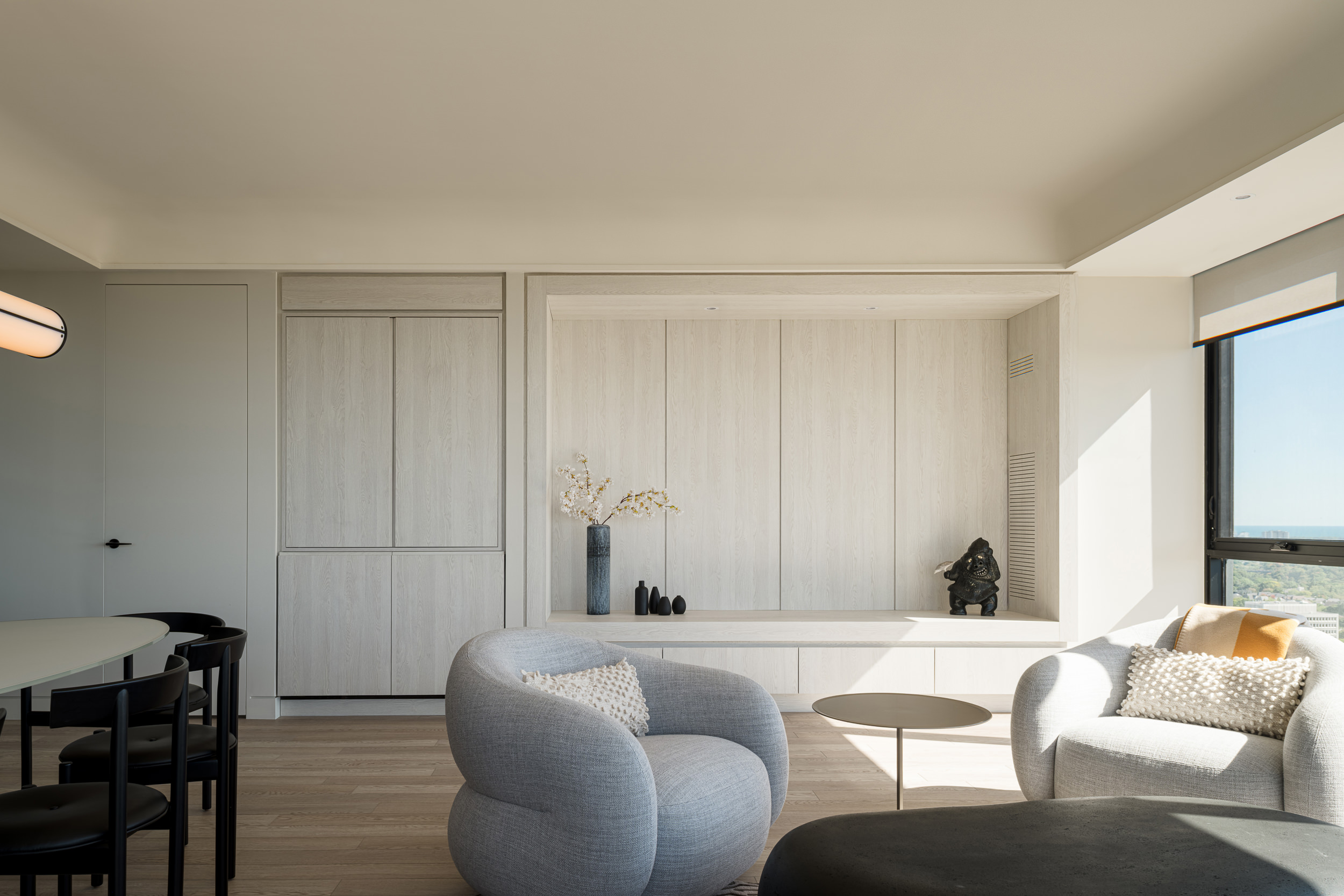
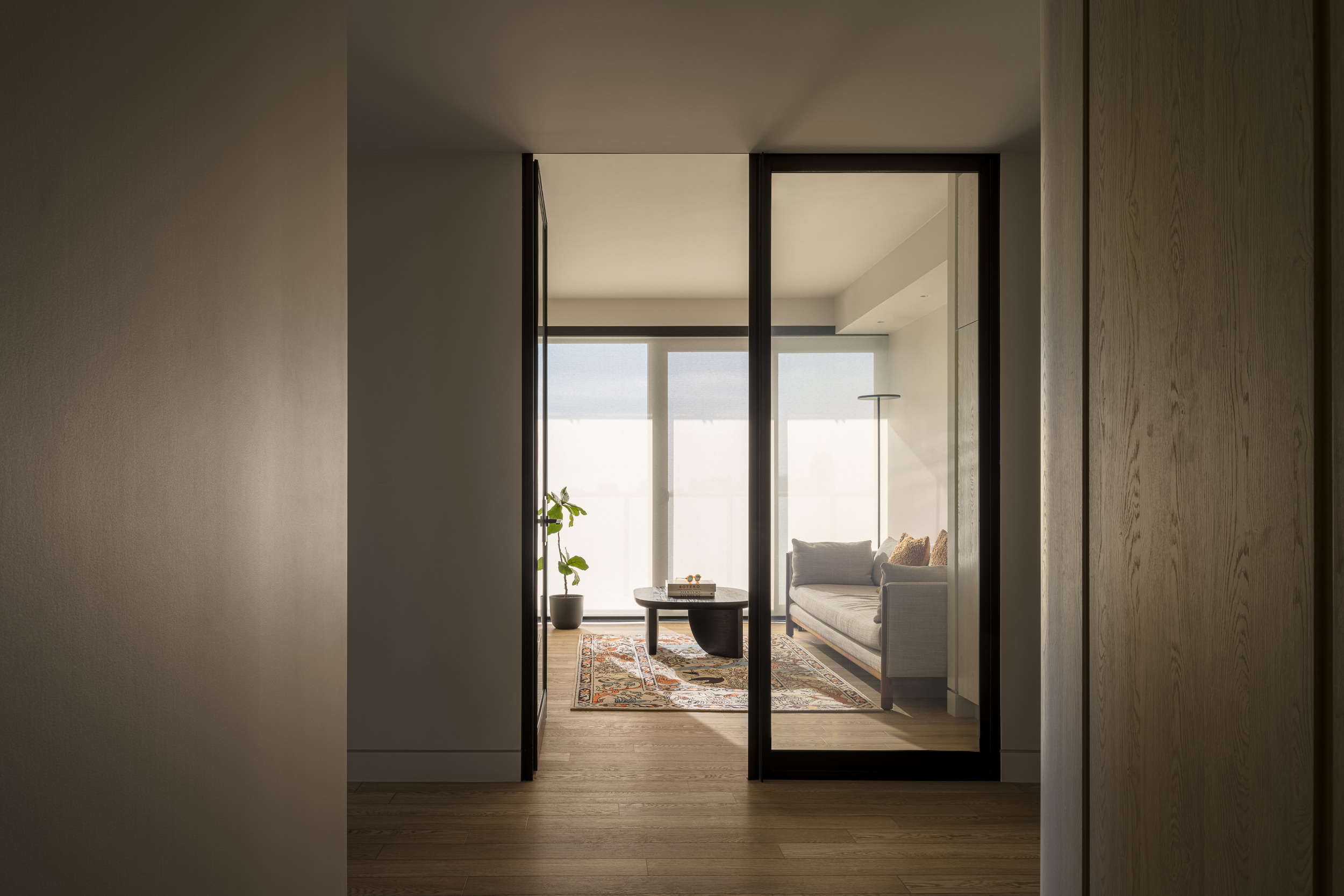
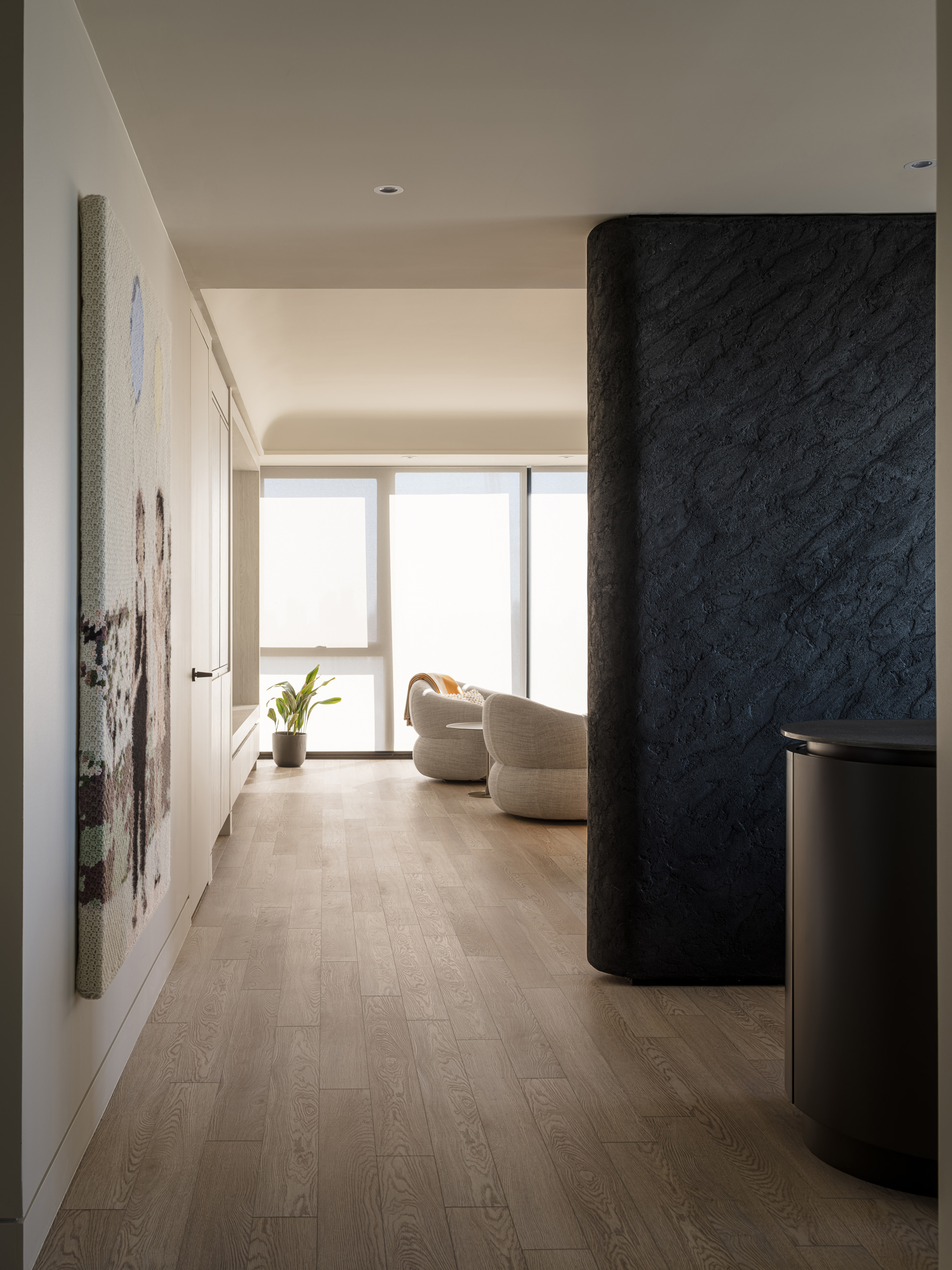
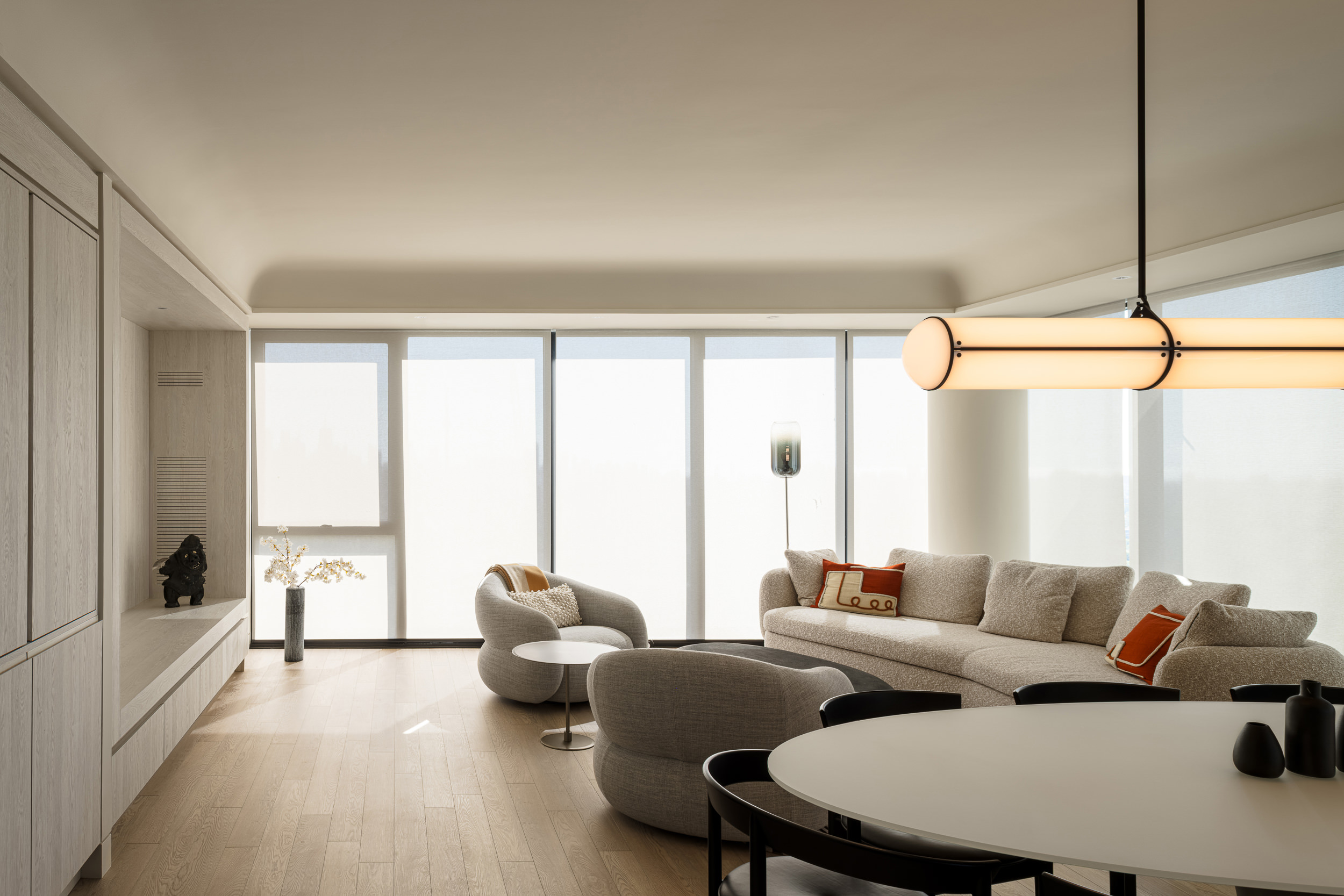
The reorganization begins with the recovery of sightlines and light as primary spatial generators. Southwest-facing views are reopened and extended across the depth of the plan, while a new glazed opening in the family room establishes an east-west visual axis from the entry. These gestures dissolve the compartmentalized logic of the original layout, replacing it with a continuous field of spatial exchange. At the center, the formerly enclosed kitchen is released into the plan as both infrastructural core and social condenser.
Material contrast becomes the project’s primary narrative device. The kitchen’s original enclosure is stripped back to raw concrete and re-clad in a dark, volcanic rock-like microcement. Its rough tactility is set in deliberate opposition to the smooth white planes of wall and ceiling, introducing friction into an otherwise restrained field. This tension between elemental and refined, heavy and light, grounds the larger openness of the home.
The domestic program unfolds through a calibrated sequence of extroversion and retreat. Living spaces remain expansive, luminous, and outward-looking, while the bathrooms withdraw into inward-facing recesses. Fully clad in textured microcement, these spaces read as monolithic voids that are introverted, reductive, and quiet.
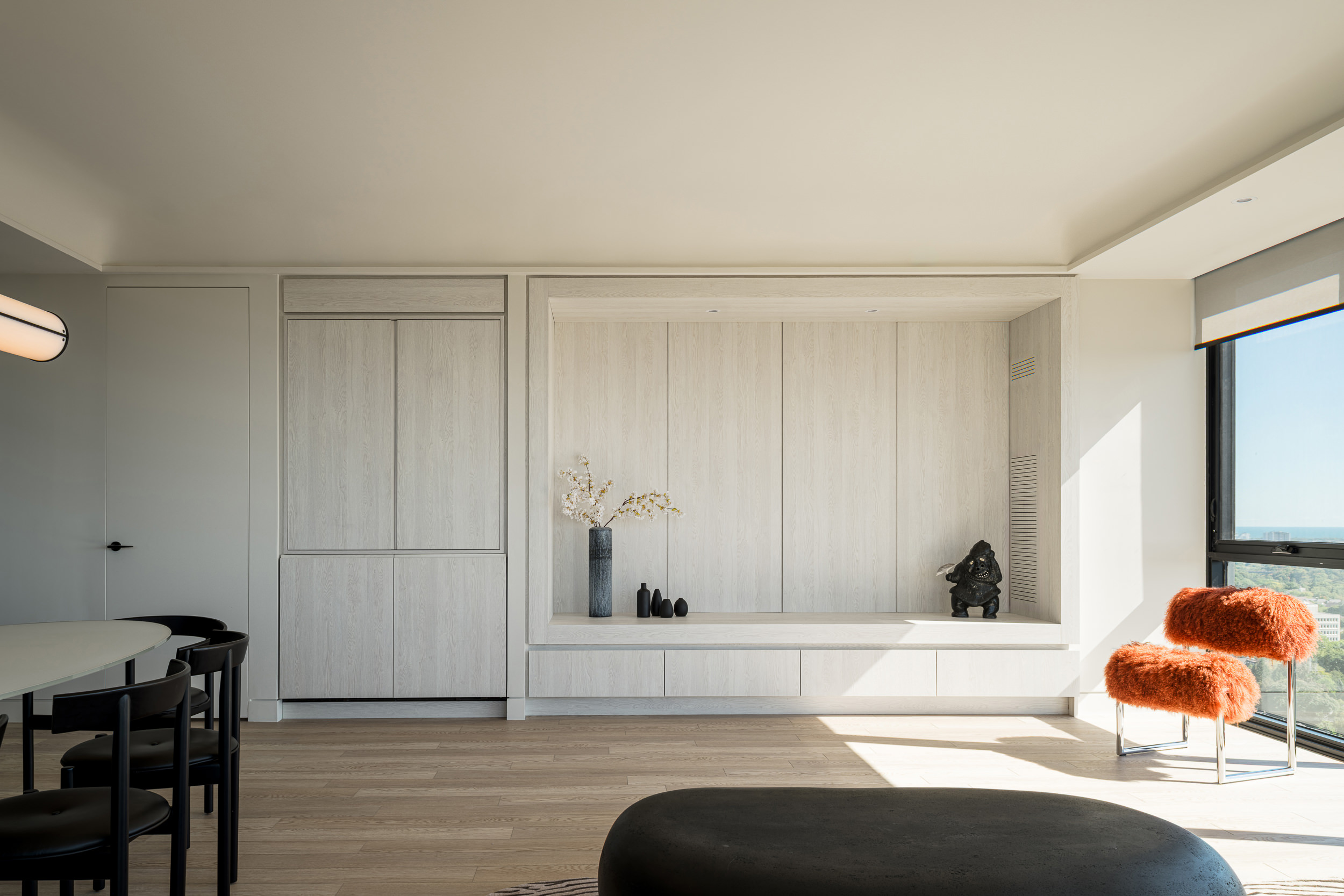
White oak flooring and integrated millwork reintroduce warmth and continuity, embedding utility into the architecture itself. Through these layered interventions, Foxbar Residence resists the anonymity of the typical condominium interior, recasting the unit as a spatial construct defined by material depth, visual porosity, and the rituals of those who inhabit it.
The original interior layout at the Foxbar Residence exemplified this condition, where a sequence of inward-facing rooms were produced through demising lines rather than human ritual. The redesign challenges this normative framework, proposing domestic space not as a byproduct of development economics, but as an active instrument shaping perception, movement, and habitation.